



Construction Site Security in Edmonton: How to Prevent Theft, Vandalism & Trespassing
Construction sites can be attractive targets for theft, vandalism, trespassing, and unauthorized access. Tools, copper, building materials, machinery, fuel, and other valuable assets may remain on-site overnight, while partially completed buildings can create additional security and safety concerns.
For contractors, developers, and project managers, a security incident can mean more than the value of stolen property. It can also result in project delays, equipment replacement, insurance claims, cleanup costs, and disruption to scheduled work.
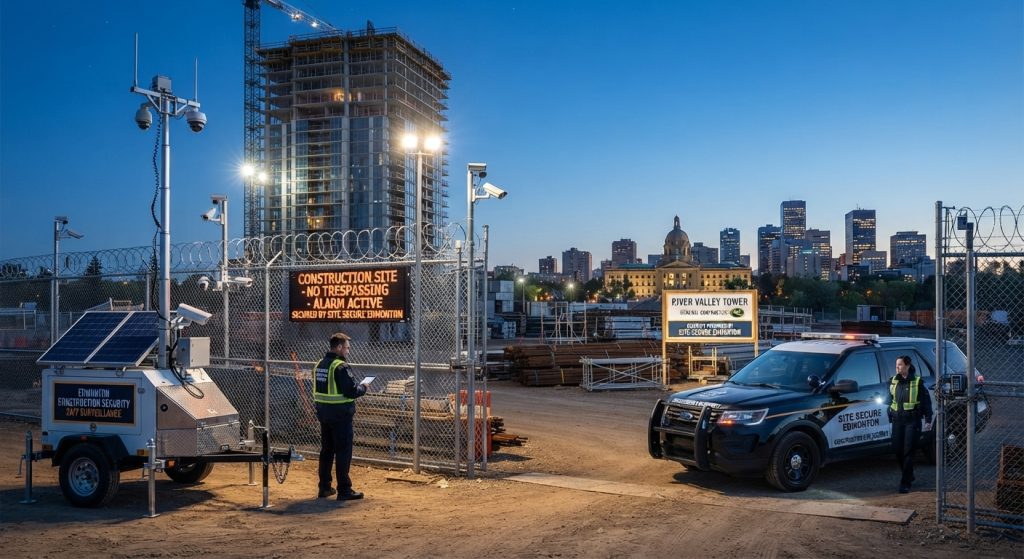
A well-designed construction site security plan in Edmonton can help reduce these risks by combining trained security guards, mobile patrols, CCTV surveillance, access control, and effective site procedures.
At Central Protection Services Inc. (CPS), we provide construction security solutions based on the size, operating schedule, location, and risk profile of each project.
Why Are Construction Sites Vulnerable to Theft?
Unlike a completed commercial building, construction sites constantly change.
Fencing may move, new access points may appear, different contractors arrive throughout the project, and valuable equipment and materials can be distributed across a large area.
Common targets can include:
- Copper wire and electrical materials
- Power tools
- Construction equipment
- Fuel
- Generators
- Building materials
- Appliances
- Mechanical equipment
- Contractor tools
- Vehicles and trailers
The risk can increase during evenings, weekends, statutory holidays, and periods when fewer workers are present.
This is why construction site security in Edmonton should focus on prevention as well as response.
1. Use Professional Security Guards
One of the strongest theft deterrents is a visible security presence.
A professional construction security guard can patrol the site, identify suspicious activity, check access points, document incidents, and respond when unauthorized individuals enter the property.
Depending on site requirements, guard duties may include:
- Perimeter patrols
- Gate monitoring
- Access control
- Vehicle checks
- Contractor sign-in and sign-out
- Door and window checks
- Equipment-area inspections
- CCTV monitoring
- Incident reporting
- Emergency response
For active construction projects, guards can also monitor areas that cameras may not fully cover.
2. Secure the Site Perimeter
Good construction security starts at the perimeter.
Fencing, gates, barriers, and controlled entry points help establish a clear boundary between public areas and the construction zone.
Site management should regularly inspect:
- Temporary fencing
- Gates
- Locks
- Openings
- Damaged fence sections
- Temporary entrances
- Building access points
Even a well-secured construction site can develop vulnerabilities as work progresses.
Security guards should therefore include perimeter inspections as part of their regular patrols.
3. Control Who Enters the Construction Site
During working hours, construction sites can have dozens or even hundreds of workers, subcontractors, suppliers, visitors, and delivery drivers.
Without proper access control, determining who should be on-site can become difficult.
A construction access-control program can include:
- Controlled entrances
- Visitor registration
- Contractor verification
- Vehicle records
- Delivery documentation
- Restricted-area controls
- Identification checks where appropriate
Access control is particularly important for larger commercial and infrastructure projects.
4. Install CCTV Surveillance
Security cameras can provide continuous surveillance of key areas.
Strategically positioned CCTV cameras can monitor:
- Gates
- Equipment areas
- Material storage
- Building entrances
- Parking areas
- Site trailers
- Perimeter zones
- High-value assets
Construction sites frequently change, so temporary or relocatable surveillance systems can be particularly useful.
At CPS, construction security programs can incorporate CCTV surveillance and remote monitoring alongside security guards and mobile patrol services.
5. Combine Cameras With Security Guards
CCTV cameras and security guards perform different functions.
A camera can observe and record suspicious activity. A trained security officer can investigate and respond according to site procedures.
For higher-risk construction projects, combining the two can create a stronger security system.
For example:
Camera detects activity → security personnel verify the situation → appropriate response is initiated → incident is documented.
This layered approach can improve both prevention and response.
6. Consider Mobile Patrol Security
Some construction projects may not require a security guard continuously stationed on-site.
In these situations, mobile patrol security in Edmonton may provide a practical alternative.
Mobile patrol officers can visit the construction site at scheduled or randomized times to:
- Inspect gates
- Check fencing
- Patrol the perimeter
- Inspect equipment
- Check doors and windows
- Identify suspicious vehicles
- Document unusual activity
Randomized visits can make security patterns less predictable.
Mobile patrols can also complement CCTV surveillance for lower-risk or smaller projects.
7. Improve Lighting Around High-Risk Areas
Poorly lit construction sites can make unauthorized activity harder to identify.
Good lighting should be considered around:
- Entrances
- Storage areas
- Equipment
- Site trailers
- Parking areas
- Building access points
- Perimeter sections
Lighting also improves the effectiveness of security patrols and can support CCTV coverage.
8. Protect Copper, Tools and High-Value Materials
Copper and other valuable construction materials can be attractive targets for theft.
Where practical, valuable materials should not be left openly accessible.
Contractors can reduce exposure by:
- Using secured storage containers
- Restricting access to material areas
- Keeping inventories
- Marking valuable equipment
- Positioning cameras around storage areas
- Increasing patrols during high-risk hours
- Moving high-value items away from perimeter fencing
Security should focus on the assets that would create the greatest financial and operational impact if stolen.
9. Secure Equipment and Vehicles
Heavy machinery and vehicles can represent significant investments.
At the end of the workday, site procedures should include checking that equipment is appropriately secured.
Depending on the project, additional controls may include:
- Designated equipment parking areas
- Key-control procedures
- Physical barriers
- CCTV coverage
- Security lighting
- GPS tracking
- Guard patrol checks
Security personnel can document equipment areas during overnight patrols.
10. Increase Security During Nights and Weekends
Many construction security incidents occur when regular workers are no longer present.
Security coverage should therefore be based on risk periods, not simply construction operating hours.
Projects may benefit from additional protection during:
- Overnight hours
- Weekends
- Statutory holidays
- Project shutdowns
- Long weekends
- Periods when valuable materials have recently arrived
Adjusting security according to changing project conditions can improve protection without unnecessarily increasing costs.
11. Use Digital Security Reporting
Security reporting is important for construction managers who may not be present overnight.
A professional reporting system can provide records such as:
- Daily activity reports
- Incident reports
- Time-stamped photographs
- Patrol records
- Visitor information
- Security observations
- Equipment-area checks
- Gate and perimeter inspections
Digital reporting gives project management greater visibility into what occurs after working hours.
At CPS, technology-supported reporting helps create accountability between guards, supervisors, and clients.
12. Review Security as the Project Changes
A common mistake is creating a security plan at the beginning of construction and never reviewing it.
Construction sites evolve quickly.
A project may move from excavation to framing, electrical installation, interior finishing, and eventually occupancy.
Each stage creates different security risks.
For example, once electrical work begins, copper theft risk may increase. Later, appliances, fixtures, and finished materials may become valuable targets.
Security plans should therefore be reviewed throughout the construction lifecycle.
What Should a Construction Site Security Plan Include?
An effective construction security plan should consider:
- Site layout
- Previous incidents
- Surrounding area
- Fencing and gates
- Access points
- Valuable materials
- Equipment locations
- Lighting
- CCTV coverage
- Guard patrol routes
- Emergency procedures
- Contractor access
- Overnight activity
- Weekend coverage
There is no single security solution that works for every construction project.
A small residential development may need mobile patrols and cameras, while a major commercial or infrastructure project may require dedicated guards, CCTV, access control, and 24/7 security coverage.
Construction Security Guards vs. Cameras: Which Is Better?
The strongest answer is often not one or the other.
Security guards provide presence and response.
CCTV provides surveillance and recorded evidence.
Mobile patrols provide periodic physical verification.
Access control reduces unauthorized entry.
When these measures are combined appropriately, they create multiple layers of protection.
For higher-risk construction projects, a layered security strategy can be significantly more effective than relying on a single measure.
Professional Construction Site Security in Edmonton
Central Protection Services Inc. provides professional construction security solutions for contractors, developers, general contractors, property owners, and infrastructure projects.
Our construction security services can include:
- On-Site Security Guards
- Overnight Security Guards
- 24/7 Security Coverage
- Mobile Patrol Security
- Access Control
- Gate Security
- Perimeter Patrols
- CCTV Surveillance
- Temporary Camera Systems
- Remote Monitoring
- Incident Reporting
- Fire Watch Security
Security programs can be customized according to the project’s risk level, schedule, and budget.
Protect Your Edmonton Construction Site
The cost of construction-site theft is not limited to the item that disappears.
A single incident can create replacement costs, downtime, project delays, insurance issues, and disruption for multiple contractors.
Taking preventive action before an incident occurs can help reduce those risks.
If you are looking for construction site security in Edmonton, construction security guards, mobile patrol security, or CCTV monitoring for a construction project, Central Protection Services Inc. can assess your site and recommend an appropriate security strategy.
Central Protection Services Inc.
Safety • Security • Protection
Contact CPS today to request a construction site security assessment or customized quote.